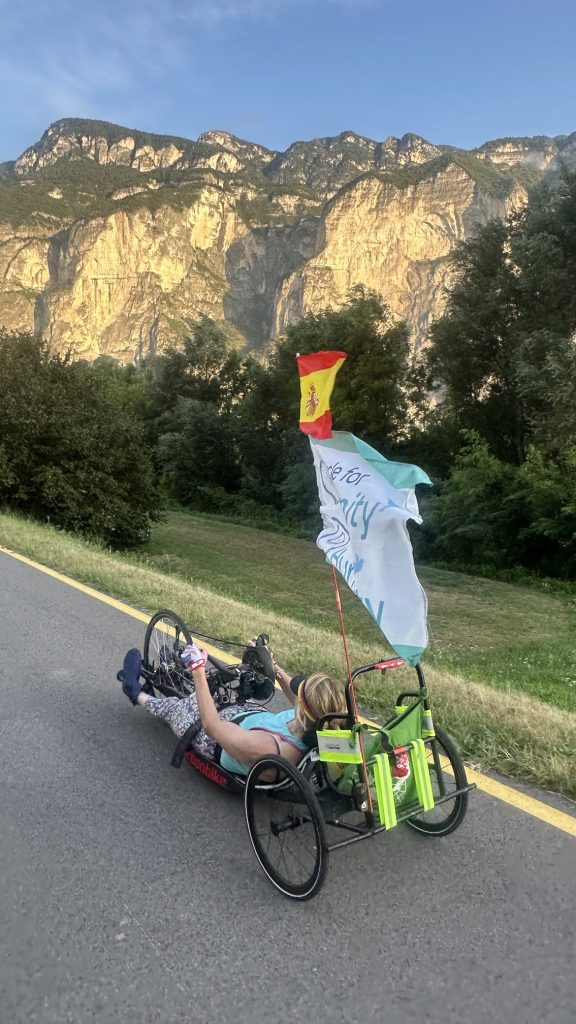
“Italy to place all 27 of its cities on highest heat alert” read the newspaper headline. When we set off from the AYUDH youth event in Germany, heading south towards Rome, I knew the ride would be challenging: a new and diverse team, a Europe-wide heatwave, fires ravaging the continent and significant distance to cover. Our ‘A Cycle for Humanity’ team were facing a testing quest…
Sixteen days. Around 100 kilometres a day. No rest days. A team of riders with different bodies, different abilities and different levels of experience. Some were accustomed to multi-day endurance riding, others had barely sat in a saddle due to injuries that had inhibited training.
There were moments when Rome felt like an optimistic ideal rather than somewhere we might actually reach!
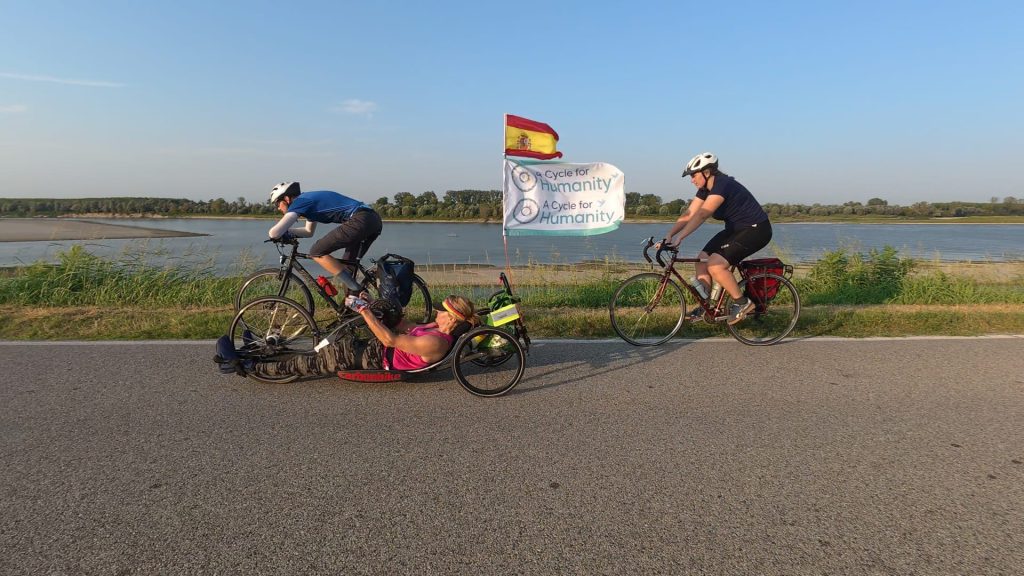
Day after day, the temperature climbed beyond 40°C (reached 48 down at handbike level near the tarmac!). We adjusted and started riding at 5am to try to find some cooler air, watching the sunrise from our bikes before the roads became an oven. By mid-morning, everything was hot. The tarmac, our bike frames, our water bottles and our bodies boiling.
There were aches, sore muscles, tired shoulders, irritated skin, niggles and pains. There were days when getting back on the bike required negotiation with the body. Pedal, eat, sleep, repeat.
Somehow, each morning, we did.
I found myself fascinated by our abilities. We often think of our bodies as fixed in ability, as if there is a certain amount we can do, a limit that we reach that we cannot go beyond. Yet I watched my own body adapt to the challenge, despite being further and longer and more demanding than just about any challenge I’ve said yes to. Despite not being able to regulate body temperature in the usual way, no sweating below my chest, I noticed becoming more tolerant of the insane heat ( my hands and forearms still burned if I allowed them to touch the ground).
Our amazing bodies – we take them for granted, we assume their limits, yet when we rise to a purpose, our body is far more capable than we might imagine. It listens and responds to what we repeatedly ask of it. It finds new ways of coping. It conserves energy. It repairs. It adjusts. It learns.
Perhaps the mind does something similar. At the end of just Day 2, the crazy temperatures and a shocked body led me to question “How are we actually going to do this? Is it dangerous to try and continue?”. The mind is very good at looking at the whole mountain at once, at its overwhelming size, then spiralling into negative thoughts that can impede our energy and progress.
Sixteen days.
1,500 kilometres.
Over 40-degree heat.
Another climb.
Another morning alarm.
Another 5am start.
The answer is usually not to think too hard or question. It is simply to observe the mind, to let the thoughts pass, to be in the moment and keep going. It is our mind more than our body that will stop us.
One kilometre.
One hill.
Another bottle of water.
A conversation.
A laugh.
Mirco-moment decisions to keep going, to focus on the beauty, on the quality of the bike path, on the towering rock walls of the Dolomites above.
Every morning I said a little prayer for us as we set out for the road, for our safety and safe passage. I felt the energy of all that were doing the same, rooting for us to reach Rome safely.
The ride didn’t ease and the heat didn’t disappear. The distances didn’t shorten. But gradually, each day, I noticed that our relationship with the difficulty changed. I didn’t need to know if or how we would make it. We simply had to show up, be with each moment and see where that led.
A long-distance cycling journey strips away a lot of unnecessary stuff. You don’t need much when you’re riding all day: food; water; a working bike; somewhere to sleep, and of course companionship and connection help.
I felt grateful for my team-mates who could see if I was struggling. Who waited, stayed curious, asked questions, made me laugh. Sharing the discomfort with others is a powerful transformer. We sometimes rode the early mornings in a chain, supporting each other through wind and sun, either chatting or simply riding together in silence. In all these ways, the kilometres passed more easily.
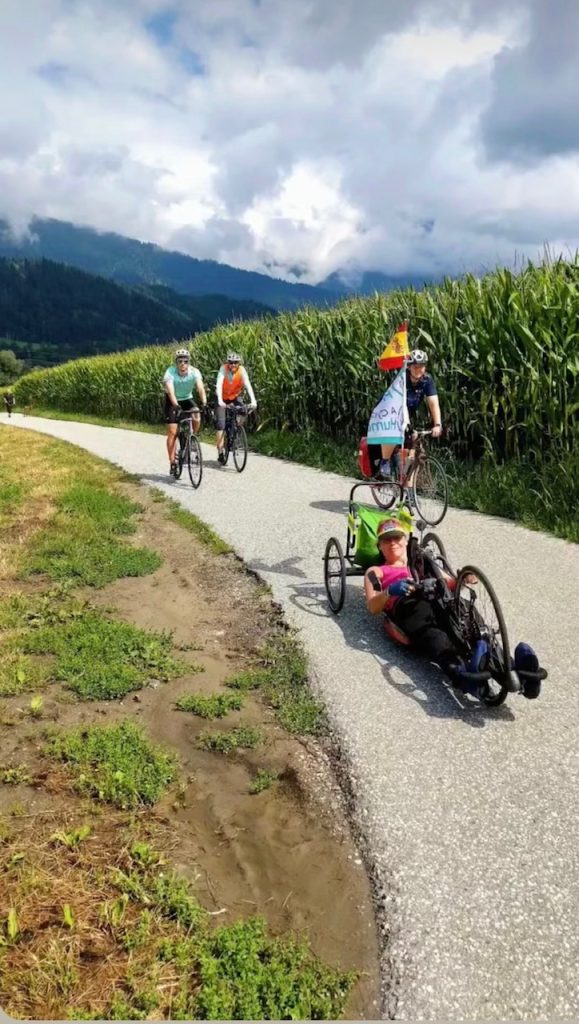
A bicycle is such a simple thing.
Two wheels, some gears, a chain, a frame – and a fantastic ability to bring otherwise strangers together. A bike helps start conversations and connects us, to each other and to the places and people we ride through.
A Cycle for Humanity had focus, intention, purpose, and a group of people willing to pedal.
We began this journey at the AYUDH European conference with an idea: to celebrate the bicycle as an instrument of peace, connection and joy. It was a Rome radio station that nominated the bicycle for the Nobel Peace Prize in 2015, and Italian MP’s who subsequently nominated the Afghan Women’s Cycling Team for the Nobel Prize too. These facts inspired us to ride.
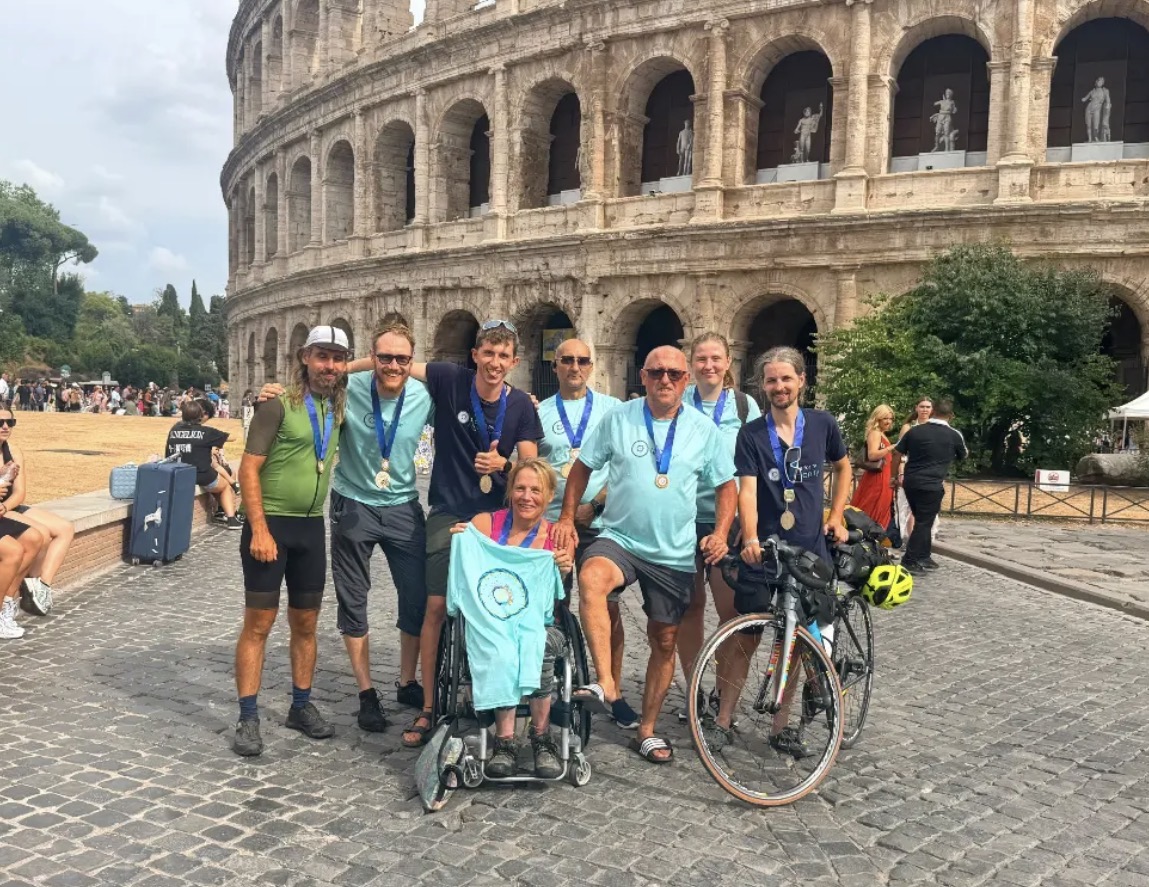
There was no great moment when our bodies suddenly transformed or our minds conquered fear. We simply kept going until eventually, after all the early mornings and all the kilometres, Rome appeared.We depended on one another. We shared hardship and humour. We discovered that our individual limits were not quite as fixed as we had imagined.
A generous little crowd of AYUDH members welcomed us across a finish link in the park above The Colosseum. An iconic place to stop. I felt relieved, joyful, moved, and sad to say goodbye…but every ending is a new beginning.
Our team was not extraordinarily strong. But collectively, we adapted and supported one another through moments of both doubt and beauty. The team, the purpose, the prayers and some grace carried us the rest of the way.
THANK YOU to the team, to all who supported us at AYUDH and beyond, to all who donated to our fundraising for AIMS hospital, Kochi, India to help people with spinal cord injuries, to Precision Fuel & Hydration, The Long Run Club and The Clarisse Pantheon Hotel in Rome. We appreciate your help and the focus it gave us.